The Quiet Takeover: What Private Equity Is Doing to Your Local HVAC Company
There’s a good chance the heating and cooling company you’ve trusted for years isn’t owned by the family whose name is on the truck anymore.
It might be owned by Blackstone. Or Goldman Sachs. Or a fund you’ve never heard of, run out of an office two time zones away, that bought the place, kept the logo, and changed everything about how it treats you.
This isn’t a conspiracy theory. It’s the single biggest shift happening in the trades right now, and most homeowners have no idea it’s going on. So let’s talk about it plainly — what’s happening, why, and what it means the next time your furnace quits in January.
The numbers tell the whole story
Private equity has moved into heating and cooling fast. Of the HVAC businesses that changed hands in the first half of 2025, just over half were bought by a private equity firm or by a company one already owned. Add-on acquisitions — where an investor-backed platform absorbs a local shop and keeps the name on the truck — nearly doubled year over year.
And those are only the sales that got reported. Most small HVAC companies sell quietly. The real number is higher than anyone tracks.
The money behind it isn't small, either. In February 2026, Blackstone — the world's largest alternative asset manager — agreed to buy Champions Group, a residential HVAC, plumbing, and electrical platform. A little over a year earlier, Goldman Sachs bought a majority stake in Sila Services, another residential platform operating more than 30 brands across the Northeast, Midwest, and Mid-Atlantic. Terms weren't disclosed there either. These are the largest money managers on the planet, and they are buying companies that fix furnaces.
The playbook isn’t a secret
Private equity isn’t evil. It’s just doing exactly what it’s designed to do, and once you see the pattern you can’t unsee it:
Buy a solid, established local company — usually one with a great reputation and an owner ready to retire — for 4 to 5 times its earnings.
Bolt on a bunch of smaller shops in the same region. Keep the names and the trucks so customers don’t notice.
Squeeze. Standardize pricing upward, push aggressive sales quotas, cut costs, lean on the loyal customer base the old owner spent decades building.
Sell the whole bundle after 3 to 7 years for 8 to 12 times earnings.
That gap — buying small companies cheap and selling the combined giant for double the multiple — is the entire business model. The HVAC work is almost incidental. You are not the customer in that equation. You’re the recurring revenue.
What it actually feels like as a homeowner
In fairness, the big platforms do some things well. They get volume discounts on equipment. They can offer technicians better benefits and training. None of that is the problem.
The problem is what happens after the spreadsheet takes over:
The hard sell shows up. When technicians are handed sales quotas, a $400 repair turns into a $20,000 “you really should replace the whole system” conversation. The pressure isn’t an accident — it’s the strategy.
Prices climb. Consolidated pricing models exist to maximize per-ticket revenue, not to give you the fair number. The diagnostic fee, the markup, the “membership” — it’s all engineered.
Service gets thinner. Local decision-makers get replaced with corporate managers chasing quarterly numbers. The people who knew your house and your system move on, and the relationship that made you trust them in the first place quietly disappears.
The good techs leave. When cost-cutting hits wages and culture, the best tradespeople walk — and your service quality walks with them.
You usually can’t tell from the outside. Same name. Same colors. Same friendly logo. The change is in the incentives, and you only feel it when you’re standing in your kitchen being told your perfectly fixable furnace needs to go.
Why we stay independent on purpose
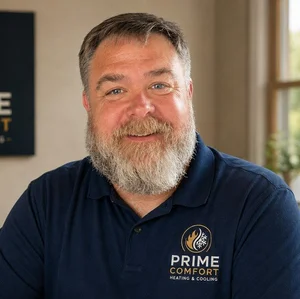
I spent 25 years in this trade — ten of them in the field, the rest in management and sales — before starting Prime Comfort. I’ve watched good companies get bought and hollowed out from the inside. That’s not a future I’m interested in.
Prime Comfort is independent, and it’s staying that way. No fund owns us. No quota tells me to upsell you on a system you don’t need. When you call, you’re talking to a local company that has to look you in the eye at the grocery store, not a portfolio entry on someone’s balance sheet.
That’s the whole reason we say Straight Talk, Every Time and No Pressure, Ever — and mean it. When nobody’s pressuring us to hit a number, we’re free to just tell you the truth: fix it when it makes sense to fix it, replace it when it makes sense to replace it, and never the other way around.
How to protect yourself
Whoever you call, ask two questions before they touch your system:
“Are you locally owned, or are you part of a larger group?” A straight answer tells you a lot.
“Can you show me the repair option before we jump to replacement?” Watch how they react. If “repair” isn’t on the table, you know what’s driving the conversation.
The consolidation wave isn’t slowing down. But you still get to choose who works on your home — and you can still choose someone who answers to you instead of to investors.
___________________________________________________________________________________________________________________________
Prime Comfort Heating and Cooling is a locally owned, independent HVAC company serving the greater Grand Rapids and West Michigan area. No private equity. No pressure. Just straight answers. Call us at (616) 345-8136 or visit hireprimecomfort.com. Elevating West Michigan’s comfort, one home at a time.